

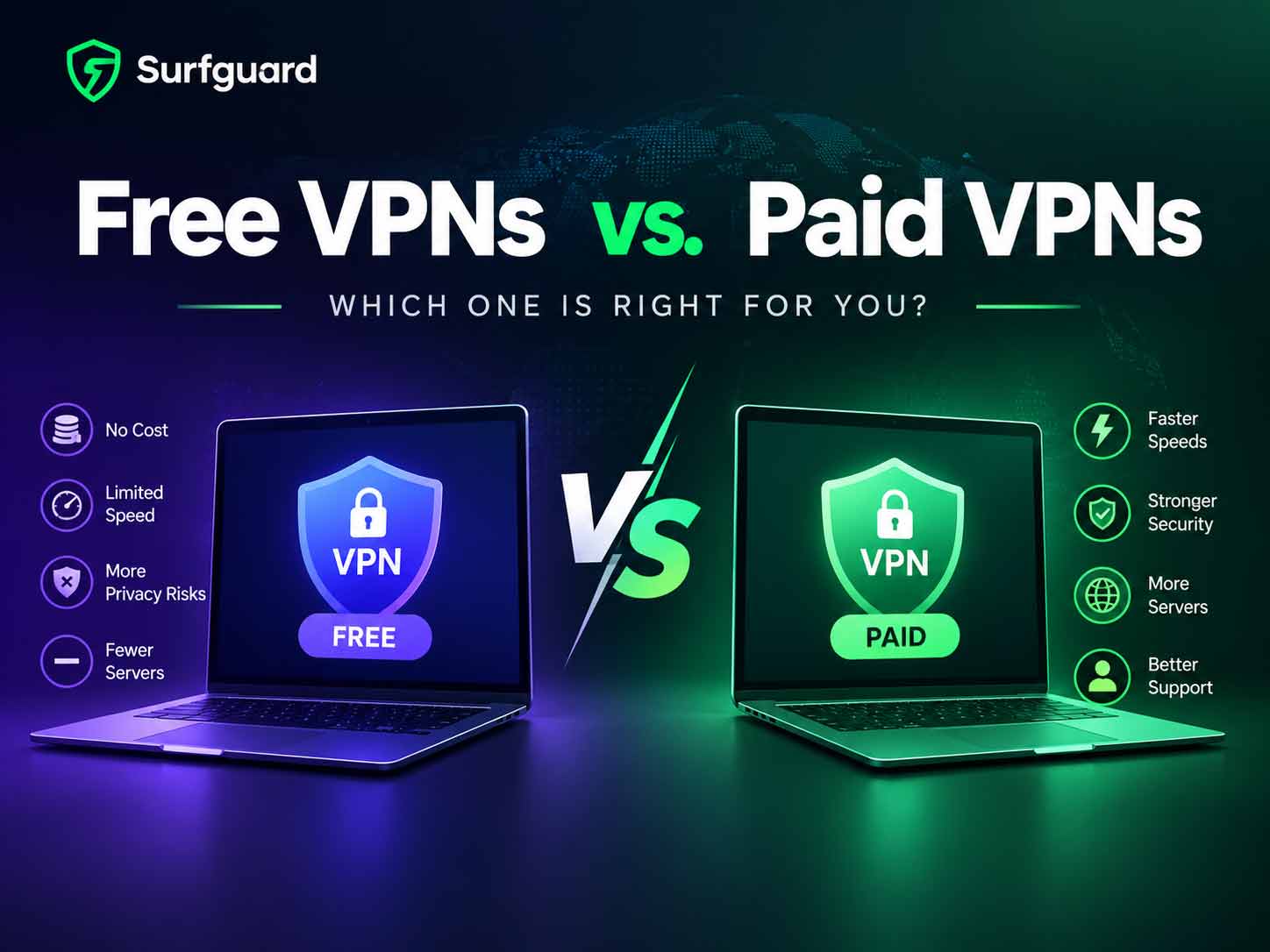
Introduction (Free VPNs vs. Paid VPNs)
Free VPNs are everywhere. They promise privacy, security, and unlimited access to content, all for zero cost. But if you are not paying for the product, you are the product. Free VPNs have to make money somehow, and that usually comes at the expense of your privacy and security. This guide will expose the hidden costs behind free VPN services. We will look at how they monetize your data, the security flaws they introduce, and why paid VPNs are almost always the better choice. We will also cover the business model of selling browsing history, the risk of malware, bandwidth throttling, and data caps. By the end, you will understand why free is never actually free.
How Free VPNs Actually Make Money (Free VPNs vs. Paid VPNs)
Free VPNs are not charities. They need to generate revenue to cover server costs, bandwidth, and employee salaries. The most common way they do this is by selling user data. They collect your browsing history, connection logs, and even personal information, then sell this data to advertisers, data brokers, and other third parties. Some free VPNs also display ads within the app or inject ads into your browser traffic. Others use affiliate marketing to earn commissions when you visit certain websites. In every case, your privacy is the product being sold.
The Hidden Costs Behind “Free” VPN Services
The hidden costs of free VPNs include:
- Loss of privacy: Your data is collected and sold.
- Security risks: Free VPNs often have weak encryption and no kill switch.
- Malware: Some free VPN apps contain malware or spyware.
- Bandwidth limits: You may be throttled or capped.
- Poor performance: Free VPNs have limited server capacity.
- No customer support: You are on your own.
These costs far outweigh any benefit of not paying a few dollars per month for a reputable service.
How Free VPNs Monetize Your Data Instead of Charging You (Free VPNs vs. Paid VPNs)
The primary business model of free VPNs is data monetization. They collect your browsing history, search queries, and even login credentials. This data is then sold to third parties. Some free VPNs also inject their own ads into your web traffic. This is how they generate revenue while keeping the service free for you.
Selling Your Browsing History: The Business Model No One Talks About
Your browsing history is valuable. Advertisers and data brokers pay good money for it. Free VPNs collect this data and sell it in bulk. They know exactly which websites you visit, how long you stay, and what you search for. This information is then used to target ads or sold to the highest bidder. This is the business model that free VPNs rely on.
Why Paid VPNs Can Actually Afford Stronger Encryption (Free VPNs vs. Paid VPNs)
Paid VPNs have a steady revenue stream from subscriptions. This allows them to invest in stronger encryption, better server infrastructure, and regular security audits. They can afford to hire security experts and implement advanced features like RAM-only servers and multi-hop. Free VPNs cannot afford these investments, so they use weaker encryption and outdated protocols.
Ads and Malware in Free VPN Apps: More Common Than You Think
Many free VPN apps contain ads and malware. Some inject ads directly into your browser. Others include tracking software that monitors your activity. In some cases, the VPN app itself is malware designed to steal your data. Always research a VPN before installing it.
Also read: How to Use SOCKS5 on iPhone 20
Bandwidth Throttling and Speed Limits on Free Plans (Free VPNs vs. Paid VPNs)
Free VPNs often throttle your bandwidth to manage server load. You may experience slow speeds, especially during peak hours. Some free VPNs also impose speed limits that make streaming or gaming impossible. Paid VPNs offer unlimited bandwidth and faster speeds.
Data Volume Caps: When “Unlimited” Becomes Very Limited
Many free VPNs claim to offer unlimited data, but they impose hidden caps. Once you exceed a certain amount of data, your speed is throttled or your connection is cut off. These caps are rarely disclosed upfront. Paid VPNs offer truly unlimited data.
No-Log Claims That Free VPNs Can’t Actually Prove (Free VPNs vs. Paid VPNs)
Free VPNs often claim to have a no-log policy, but they rarely back it up with independent audits. Without audits, these claims are meaningless. Paid VPNs are more likely to have published audit reports that verify their no-log status.
Jurisdiction Risks and Legal Data Sharing on Free Services
Free VPNs are often based in countries with weak privacy laws or that are part of intelligence sharing alliances like the 14 Eyes. This means they can be forced to hand over data. Paid VPNs are more likely to be based in privacy friendly jurisdictions.
How Free VPNs Can Expose You to DNS and WebRTC Leaks (Free VPNs vs. Paid VPNs)
Free VPNs often lack proper DNS leak protection and WebRTC blocking. This means your real IP address can leak through these channels. Paid VPNs implement robust leak prevention features.
The Difference in Server Quality Between Free and Paid Providers
Free VPNs use overloaded servers with limited capacity. Paid VPNs invest in high quality servers with better performance and reliability. The difference is noticeable in speed and stability.
Customer Support: Why Free Users Get Left in the Dark (Free VPNs vs. Paid VPNs)
Free VPN users get little to no customer support. If you have a problem, you are on your own. Paid VPNs offer live chat, email support, and sometimes even encrypted support channels.
Is There Ever a Safe Free VPN?
There are very few safe free VPNs. The ones that are safe are usually limited in features and data. Examples include ProtonVPN’s free tier and Windscribe’s free plan. These are exceptions. Most free VPNs are not safe.
The Security Flaws of Free VPNs (Free VPNs vs. Paid VPNs)
Free VPNs often have:
- Weak encryption.
- No kill switch.
- DNS leaks.
- WebRTC leaks.
- Malware.
- No audit transparency.
These flaws make them unsuitable for any serious privacy protection.
Common Mistakes Beginners Make on Free VPNs vs. Paid VPNs
- Assuming free VPNs are safe.
- Not reading the privacy policy.
- Ignoring data caps.
- Using free VPNs for sensitive activities.
- Not verifying no-log claims.
Pro Tips for Choosing a VPN
- Always choose a paid VPN.
- Verify no-log claims with audits.
- Check the jurisdiction.
- Use a VPN with a kill switch.
- Pay with cryptocurrency for anonymity.
- Use Worlddumps.site for SOCKS5 bundles and anti-detect profiles.
Expert Insights on VPN Security on Free VPNs vs. Paid VPNs
Security experts universally recommend avoiding free VPNs. The cost of free is your privacy and security. Paid VPNs provide real protection.
Real World Applications
Free VPNs are sometimes used for casual browsing, but they should never be used for sensitive activities like banking, account logins, or OPSEC related tasks.
Actionable Takeaways on Free VPNs vs. Paid VPNs
- Avoid free VPNs for anything important.
- Use a paid VPN with a verified no-log policy.
- Pay anonymously with cryptocurrency.
- Use Worlddumps.site for additional privacy tools.
Summary of Free VPNs vs. Paid VPNs
Free VPNs are never truly free. They monetize your data, introduce security risks, and often fail to protect your privacy. Paid VPNs are the only reliable choice for real security.
Conclusion of Free VPNs vs. Paid VPNs
If you value your privacy and security, avoid free VPNs. Invest in a paid VPN that offers real protection.
Call to Action: Visit Worlddumps.site to get Non VBV BINs or clonecards.store to get clone cards, legit dumps with pin and carding materials. Also visit cvvdump.uno to get money swift money transfer service which includes bank transfer, PayPal, CashApp, Venmo, Zelle, and Western Union transfers.
Also read: How to Choose a VPN for OPSEC
FAQ on Free VPNs vs. Paid VPNs
Are free VPNs safe? Most are not. They often sell your data, contain malware, and have weak security.
How do free VPNs make money? By selling your browsing history, displaying ads, and injecting affiliate links.
What is the biggest risk of using a free VPN? Loss of privacy. Your data is collected and sold to third parties.
Do free VPNs have no-log policies? Some claim to, but they rarely have independent audits to verify.
Can free VPNs give me malware? Yes. Many free VPN apps contain malware or spyware.
What is bandwidth throttling? Free VPNs often slow down your connection to manage server load.
Do free VPNs have data caps? Yes, even if they claim unlimited. Hidden caps are common.
What is the best free VPN? ProtonVPN’s free tier and Windscribe’s free plan are considered safer, but they are limited.
Why should I pay for a VPN? Paid VPNs offer stronger encryption, no data selling, better performance, and customer support.
How can I pay for a VPN anonymously? Use cryptocurrency like Bitcoin or Monero.
Featured Image Details
- Alt Text: Free VPNs vs paid VPNs why free is never free data selling security risks
- Caption: The truth about free VPNs: hidden costs, security flaws, and why paid VPNs are safer.
- Description: A professional infographic showing a scale with a free VPN on one side weighing down with data selling, malware, and throttling, and a paid VPN on the other side with encryption, privacy, and security. Includes logos of Worlddumps.site, Buyccfullz.site, Clonecards.store, and Cvvdump.uno.
